
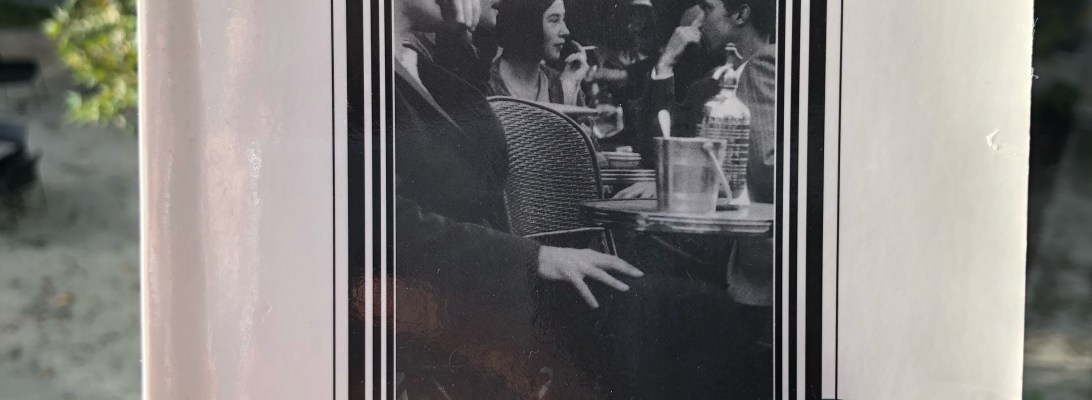
So in the past few days, I finished this book and it was really a delightful escape to the Paris of many years past. A Moveable Feast was published posthumously and is a chronicle of Hemingway’s time in Paris after the First World War with his wife Hadley and the people they encountered during their adventures. The last section is devoted to F. Scott Fitzgerald and their friendship. Despite the title, there is not much feasting going on but the book contains beautiful and melancholic descriptions of Paris. I choose this book because it came highly recommended from several expatriate sites when I was looking for books about France. As it was written about life in the twenties, I’m not sure how relevant it will be for my journey to France but I really did enjoy the book. This is yet another one of my secondhand reads which I love but please, please, please go buy something full price from your local bookstore! I love saving money on books but if you can spend it, your local bookstore could really use the support with the lack of walk-in traffic these days. I know that my favorite southern California bookstore was really struggling and they ended up asking people for business which really helped! But don’t let your local bookstore get to that point please! Bookstores are a super important part of the community so please support them! Now back to Hemingway!
I have never read any of Hemingway’s work but I was aware of his very “macho” reputation and propensity for being called Big Papa. Coming into this book with those assumptions, I was absolutely floored by the tenderness and melancholy that I found in this book. Not only was Hemingway emotive in the extreme, he also recognized his own foibles and didn’t shield them from the view of the reader. I really enjoyed just reading the little vignettes about his various experiences in Paris. In other parts of the novel, he was coarse and rude and terrible but overall, he wasn’t what I expected. Perhaps because he was in Paris during a period of relative peace and was yet building up his reputation as an author, he was more free to write about his entire experience and emotions. Hemingway’s last view chapters are dedicated to his relationship with F. Scott Fitzgerald and it’s clear that Hemingway cared both a great deal for F. Scott while vehemently hating Zelda Fitzgerald. Overall, I enjoyed the book because it was very refreshing and I felt that I got to experience Paris as Hemingway did. However, as any author, Hemingway takes liberties with the personalities involved, twisting them to suit the story. I would just caution the reader to not judge all the persons presented based on Hemingway’s account of them. I would recommend this book, especially to people who read a little before bed. The chapters are more like self-contained stories and are read quickly. If you’re looking for a little literature at night, this is an excellent place to start!

 Micki's Bakery